

Energy and Power
News and updates featuring research, faculty achievements, student projects, and industry impact about Energy and Power.

A new artificial intelligence tool developed by Texas A&M researchers could support nuclear engineers and operators by providing real-time insights for advanced reactor systems.

The Institute for a Disaster Resilient Texas has developed a tool to monitor power outages in near real-time, benefiting emergency responders and civilians.
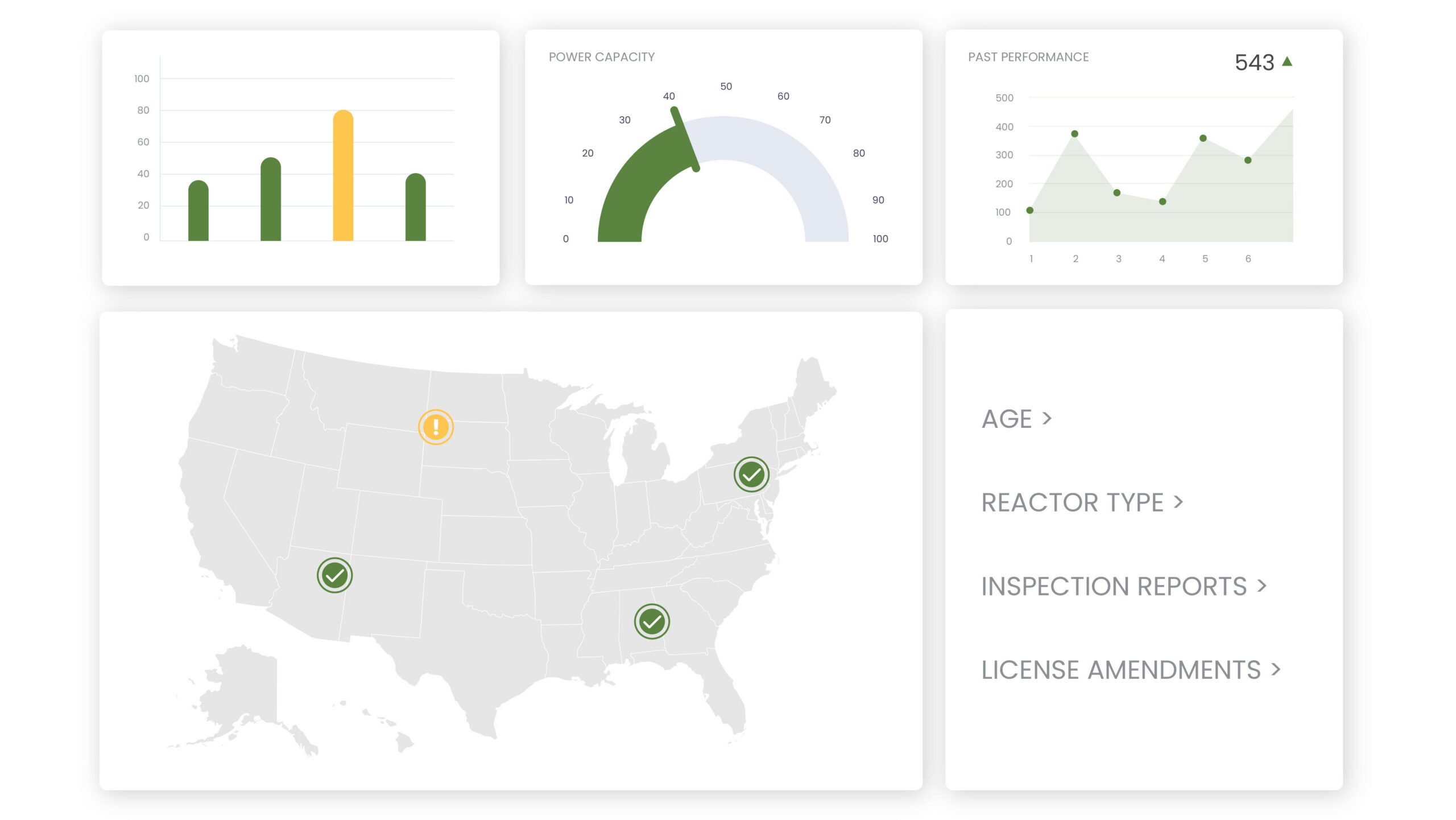
Nuclear engineering Ph.D. student Dan Watson built an online tool that gathers public data into an interactive dashboard that visualizes nuclear power plants across the United States.

Deployable Energy announces research agreement with Texas A&M Engineering Experiment Station to advance scalable microreactor technology
Feb. 19, 2026 • 3 min. readThe multi-year collaboration will accelerate experimental validation, modeling and workforce development for next-generation microreactor deployment.

Kairos Power and Texas A&M Engineering Experiment Station (TEES) partner in research for advanced nuclear reactor deployment.

Researchers are developing dynamic models to understand how large grid loads — such as data centers and cryptocurrency facilities — react to disturbances, helping improve grid reliability.

Equipped with knowledge of resilient ecosystems, Texas A&M researchers showcase the strength of bio-inspired cyber-physical power systems.

Texas A&M researchers develop metallic gel that could transform batteries
Oct. 22, 2025 • 5 min. readThe new gel holds its shape at extreme temperatures and opens the door to safer, more powerful batteries and energy storage for the future.

Researchers developed a framework to keep processing plants safe from cyber-attacks.

Mechanical engineering student awarded Chevron Energy Fellowship
Oct. 7, 2025 • 3 min. readDigvijaysinh Barad is advancing industrial energy efficiency through innovative research on compressed air systems and decarbonization strategies.