


Information Systems and Data Science
News and updates featuring research, faculty achievements, student projects, and industry impact about Information Systems and Data Science.

Texas A&M University engineers make groundbreaking discovery about the origins of life and establish a framework that improves research outcomes.

Dr. Arum Han leads technology development for a new National Institutes of Health (NIH)-funded center to advance organ-on-a-chip systems, improving chemical toxicity testing and reducing reliance on animal studies.

Rethinking safety in real-world industrial systems
June 15, 2026 • 4 min. readAtif Ashraf, a recent Ph.D. graduate in industrial and systems engineering, studies how frontline workers adapt in practice when safety procedures meet the realities of high-risk work.

With the help of a grant from the Office of Naval Research, Dr. Wencheng Jin of Texas A&M is developing AXBeach, a computer model that can predict real-time changes to shorelines during storms.

The Modeling, Engineering, Design and Analysis Laboratory (MEDAL), led by nuclear engineering professor Carlo Fiorina, investigates the use of computer simulations to solve a wide variety of problems in nuclear engineering.

Texas A&M researchers are comparing methods to measure ocean surface currents and tidal dynamics using drones.
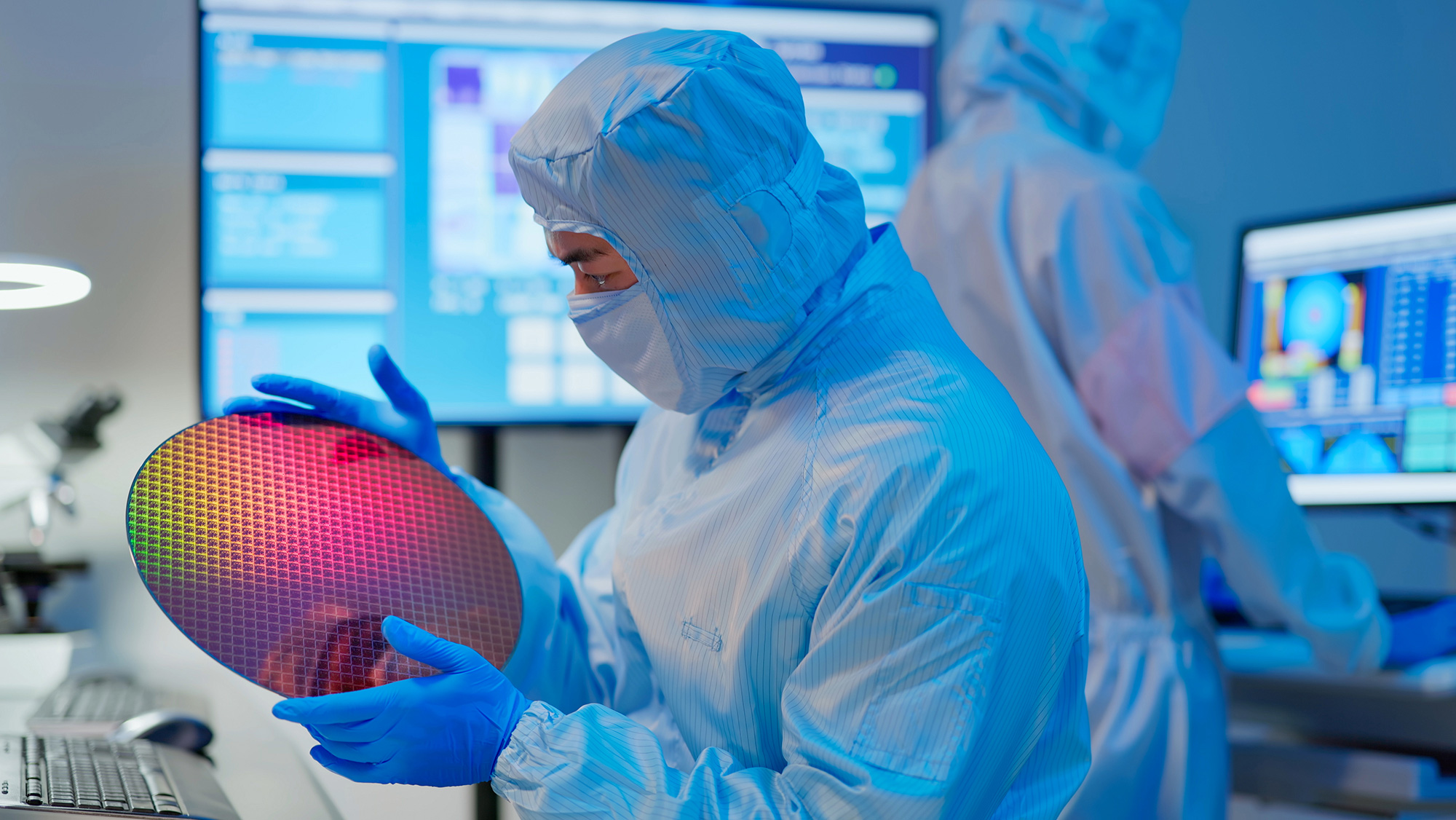
Diodes Incorporated and Texas A&M partner to promote semiconductor skills and industry acumen
Sep. 9, 2025 • 3 min. readTexas A&M graduate students are conducting semiconductor research projects related to chip design, biomedical applications and machine learning.

Three engineering faculty members receive prestigious NSF CAREER Awards
Aug. 19, 2025 • 4 min. readThe awards will support faculty work to solve complex engineering challenges in different fields.

Drs. Linda Katehi and Jian Tao are developing digital twin technology to create customizable, AI-powered sensor systems that can be built faster, more affordably and with better performance.

Researchers are shortcutting complex equations with AI, paving the way for engineering and scientific breakthroughs.